Showing posts with label Rachael. Show all posts

Wednesday, January 15, 2014

China Conservation and Research Center for the Giant Panda


Rachael Trost reporting

The Beifengxia base of the China Conservation and Research Center for the Giant Panda is tucked about 150 kilometers from Chengdu, the capitol of the Sichuan Providence in southwest China. CCRCGP was formed in 1980 through a partnership between the World Wildlife Fund and China in an effort to revive the declining panda population. The center focuses on research, education, and conservation of the endangered giant panda.
 
Logo of CCRCGP on a truck at the center. 

There is speculation about the exact number of Giant Pandas in the world, but the figures fall between 2,000 and 3,000, roughly around 1,500 in the wild. Although classified as carnivorous mammals, 99% of a panda’s diet consists of bamboo. Scientists agree the switch from meat to bamboo took place about 4.2 million years ago, but no answer as to why.

One reason CCRCGP is a leader in panda conservation revolves around panda breeding. Female pandas are only in estrus two to three day out of the year, marking a time frame of time for breeding. Breeding pandas in the Scientists and Researchers at the center have developed unique techniques such as showing pandas videos of mating to encourage the same behavior. Along with these issues, the center is growing information surrounding hormones, panda personalities, and information on the habits of these creatures. CCRCGP also prides itself on its efforts in  rearing and teaching new panda mothers.


The center here near the city of Ya’an boosts to hold over 80 captive bred Pandas, by far the largest number of pandas held in captivity in the world. Certain parts of the park are open to the public, while a majority is staff only research and breeding areas. The most popular destination within the center is the Panda Kindergarten. There visitors can find young pandas between the ages of 6 months to 2 years old playing together in an outside enclosure.

A worker bringing rocks to a new enclosure. Many workers were residents of
nearby small towns who need extra income. 
The center suffered a significant set-back after a 5.2 earthquake struck the region in 2008. The quake destroyed several panda enclosures and led to the relocation of nearly 20 pandas from the center to other zoos across China. As the center is in a pretty rural location, it took several days for assistance to reach the pandas and on-site employees. Many keepers are credited for keeping their pandas alive and calm during the ordeal.  The center is still working on rebuilding certain enclosures that were destroyed.

Staff members said the goal for this year is for at least 10 more panda cubs to be born, hopefully 12. It always depends on the success of researchers and some artificial insemination.


Monday, January 13, 2014

The End of the Dàolù

Rachael Trost reporting

As this experience abroad has come to an end, I cannot express my gratitude for each moment here and every person I met along with road (that's Dàolù in Chinese if you were wondering about the title of this post).
The entrance to the center early on a foggy morning. 

If you are ever traveling to this specific region of southwest China, here are a few tips you should really pay attention to before you depart. Just some things I wish I had known before I left.

  1. In the winter months, pack LOTS of layers to keep you warm and dry. Especially pajamas, I learned this lesson the hard way. 
  2. When packing such clothes, make sure you have full outfit options in separate bags in case the airlines loose or delay your luggage. If it could happen to me, it could happen to you. 
  3. It's normal for no one to understand what you are asking for. This can be really fun though as you discover new ways to address your wants. Hand signals are your friend :) 
  4. Be prepared to walk. The best way to see the small cities and explore surrounding areas is on foot. 
  5. A few necessary packing items include...
    1. filtered water bottle (all the water they will serve you is boiling hot, a filtered bottle will allow you to sip on cooler water from the tap).
    2. Nutrition bars or granola bars, whichever you prefer. Meals are served 3 times a day, but that can be a long time to wait if you are hungry. 
    3. Slippers, seriously bring slippers. The buildings have no central heating and high humidity, leaving the floors a bit damp and pretty cold. 
    4. A passport, money, and id holder. I bought mine on Amazon for $10. Buy one that hangs around your neck for easy access to important documents while traveling along with safety for your bills while exploring the towns. 
    5. Camera, extra batteries, and extra batteries. I cannot tell you how frustrating it is to realize out in the field your camera is almost dead. 
  6. A smile and simple "hello" go a long way. Even if that's all you can say in the native tongue, it will open up others to you. (Hello in Chinese is Ni hao in case you were wondering). 
  7. Don't be alarmed when you hop in a taxi and the driver enters the incoming lane of traffic. It's normal for them to honk madly and swerve from one side of the road to another. 
  8. Push the limits. A sign says staff only? If you are a volunteer, you are staff right? Take the path untraveled and live a little. 
  9. Enjoy, simply that. 


The lovely group of volunteers I spent the week with. From left to right..
Anon and Johanna from Germany, Dan from Australia, Fillipa from Sweden,
myself, and Frederick from Australia. 

There is no experience more special than hand feeding one of the most endangered animals on the planet. The center gave me an extremely unique opportunity to see the inter-workings of caring for these animals. I will miss the odd noises Yi Bao and Xin Hui would make as we carried their panda cakes to them, to watching the panda kindergarteners antagonize one another on their swing set, the memories are enough to last a lifetime. 


As I say goodbye to China, I say farewell to this blog as well. I cannot thank the Murrow College, the professors, and all the donors who made this trip possible for me. 

Just Some Panda Pictures

Throughout my stay at the China Conservation and Research Centre for the Giant Panda, I took hundreds of photos of the pandas I got to work closely with. As I am finishing up my blog posts, I am sadly coming to the conclusion most of those photos may not make it into this blog.

This post although skinny in words, will be rich in photographs from my journey. Below find some of my favorite photographs I snapped in the field that did not seem to fit within specific posts.

Pandas are everywhere in China, even on the seat covers in the taxis! 

The streets in downtown Ya'an always busy with traffic from bikes to mopeds. 

As you can see in the background, there were a rainbow of colors of mopeds for sale in the city. 

There were LOTS of bike taxis in the city, a very cheap way of getting around to close destinations.  
The view from inside my taxi taking me to the center from the bus station in Ya'an.

The river we followed up the canyon. It was pretty dry for this time of the year my guide said.

Chinese lanterns hanging near the entrance of the center. 

The sun shining over the entrance sign of the CCRCGP.

Xin His patiently waiting for feeding time. He was by far the most vocal panda at the center.

Yi Bao eating the special "panda cakes". 

What kind eyes he has huh?


Panda foot 

Xin His waiting for more food. 

Volunteer Johanna checking to see if her initial was still in the recently laid cement. 

As you can see, it is! She says she left her mark on the center forever. 

A view of the official entrance for the CCRCGP from the sunny first day I was there. 

A keeper on the fence between panda enclosures. 

Keepers form relationships with each panda they care for.


Tourists standing at the bottom of some enclosures hoping to see some panda action. 


One of many stands in and near the center selling panda merchandise of all kinds. 

The bamboo truck who delivered pounds of bamboo to the enclosures daily. 


The house next to our hostel always had freshly chopped wood. Not sure why though..

This child's poster was laid sideways against a wall outside our hostel. 

Hang drying clothes was the only option in this part of China. Dryers were nonexistent in this tiny town.

Through the trees, you can see the entrance of the base. 


The road directly in front of the base entrance. The little shops were filled with souvenirs and different foods like meat and corn. 


The bridge at the base entrance had beautiful carvings of pandas on each panel. 


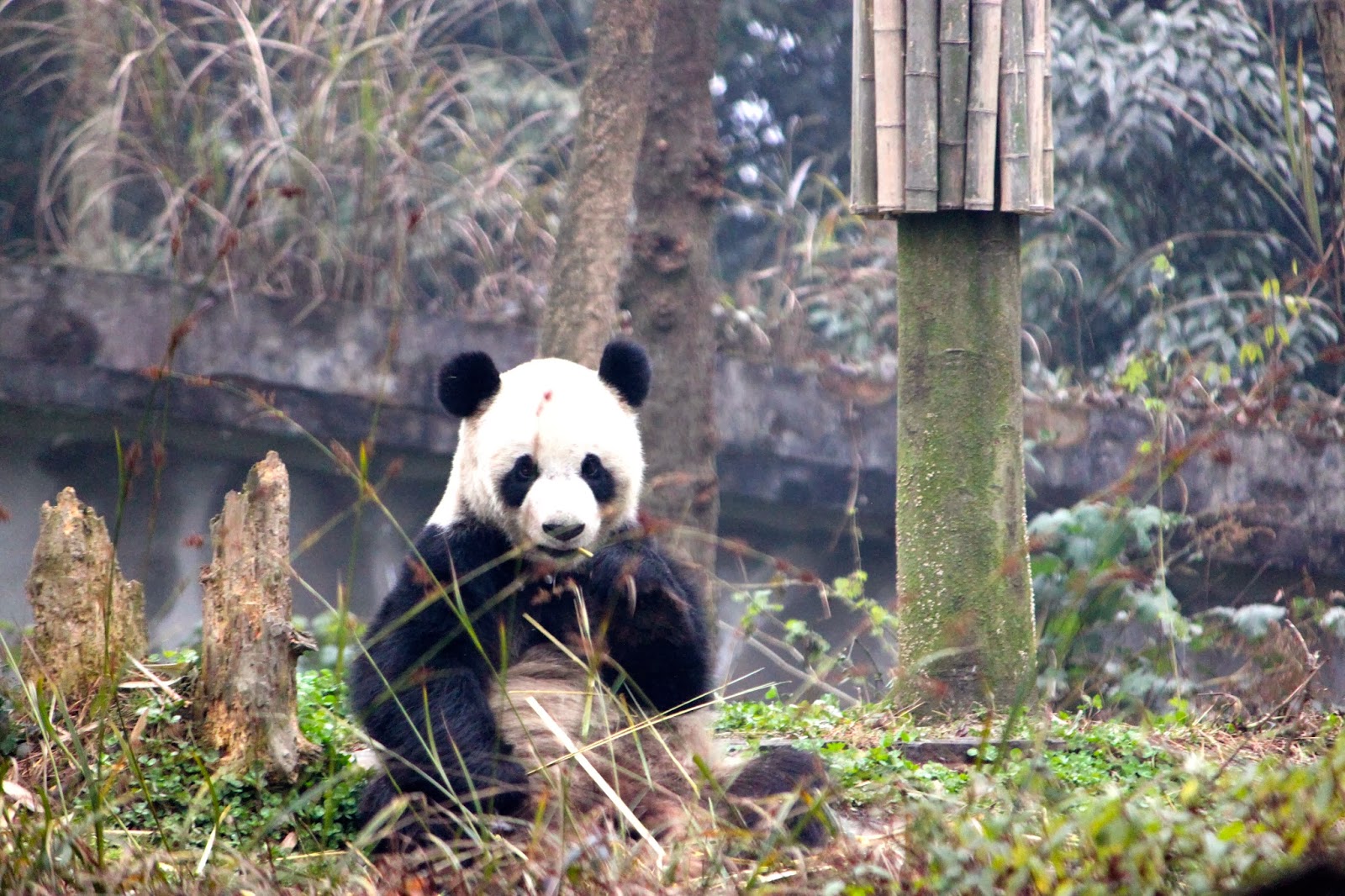
Just munching on some bamboo. Panda's diet consists 99 percent of bamboo. 


A map of the base for visitors to see which areas to find which pandas. 


A large rock indicating the road to the research section of the park. This area was not open to the public. 

One of the kindergarteners drinking water from their little pool. You can see how fuzzy his coat is. 


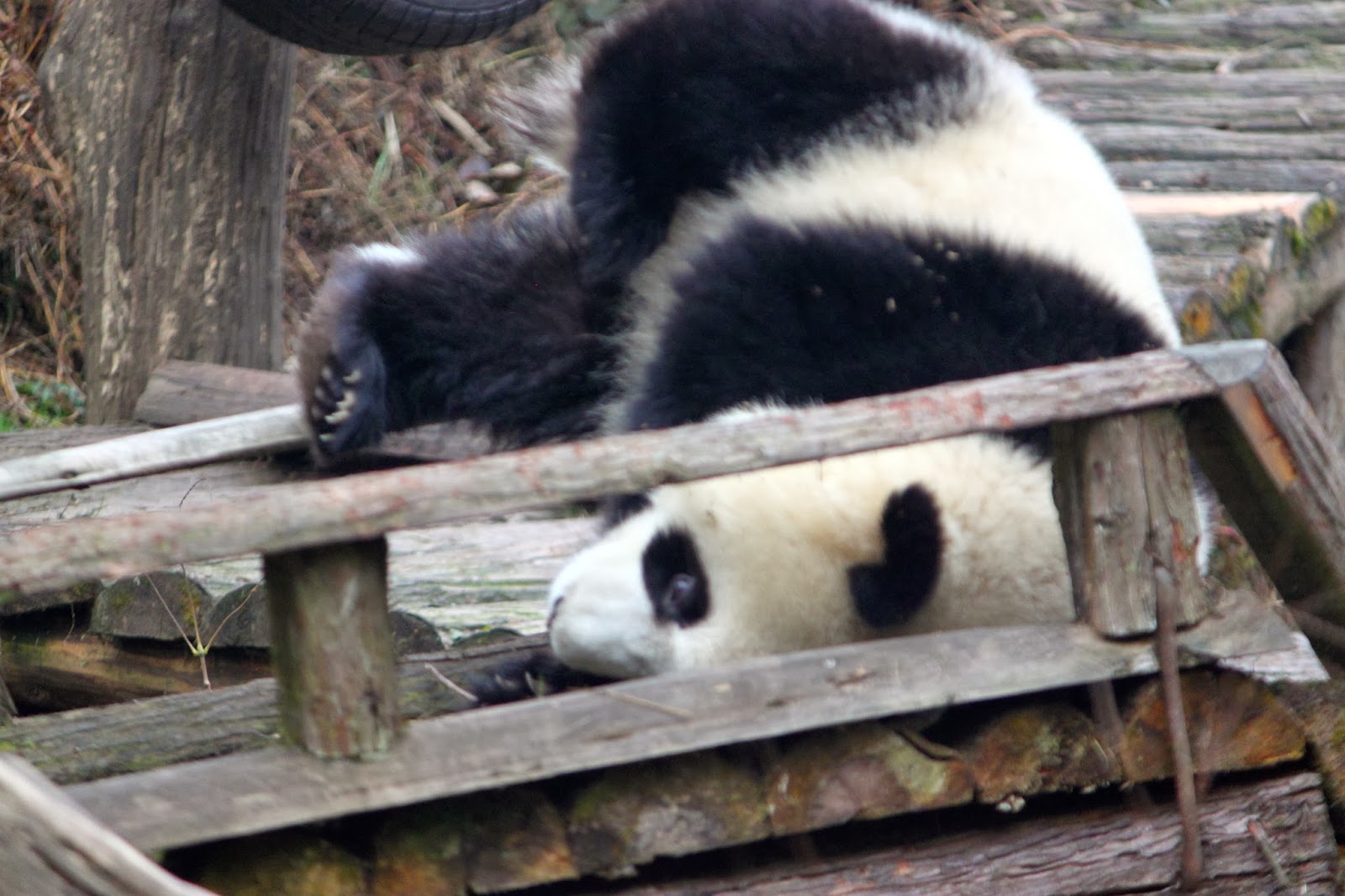
Just playing in the tree. These babies would play all afternoon and sleep the rest of the day.


The kindergarteners had tons of toys to play with in their enclosure like these tires.

Pandas spend about 16 hours a day eating or foraging for foo

Volunteer Filippa cleaning Xin His's enclosure. 


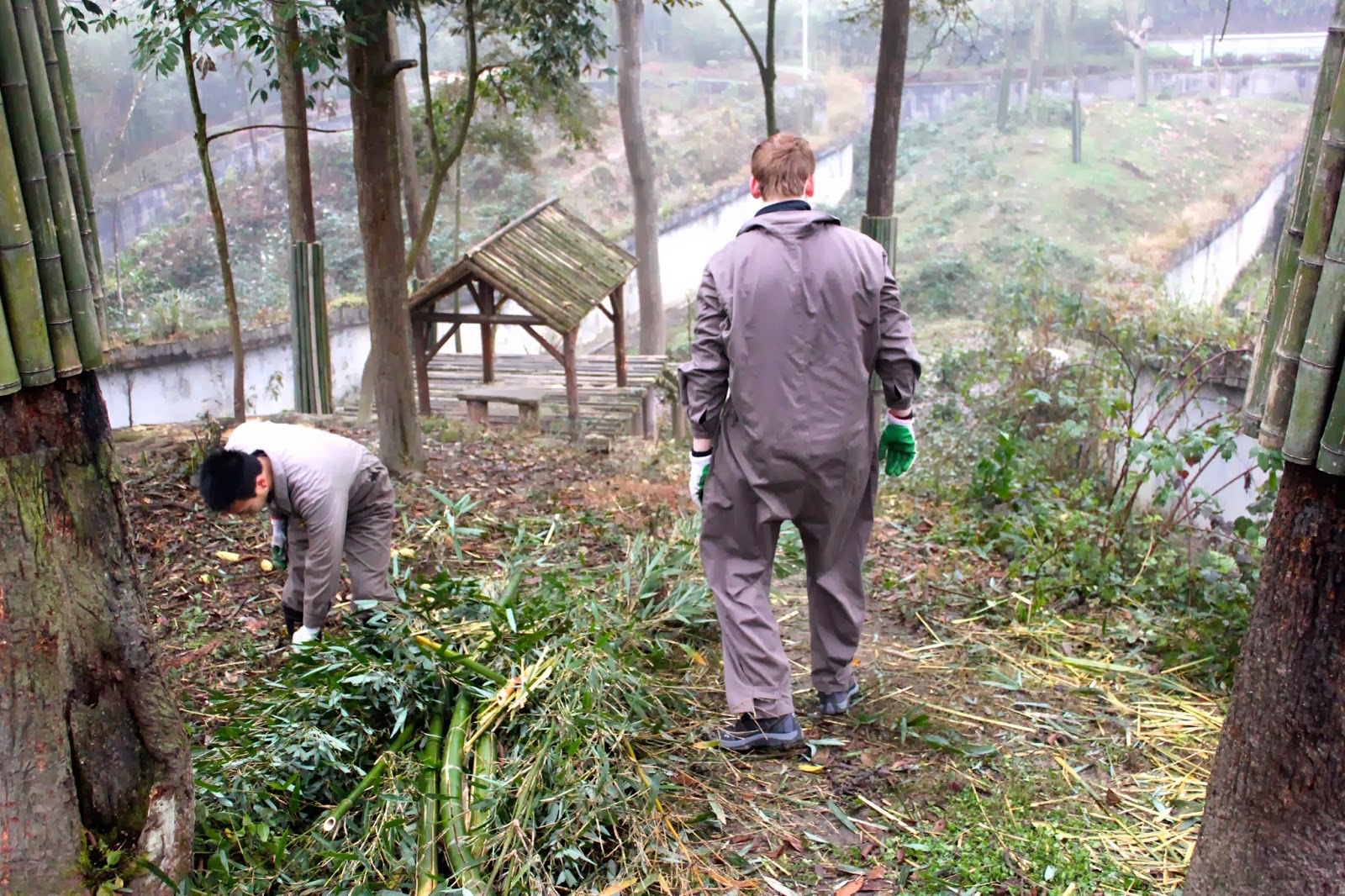
Volunteer Dan helping remove the garbage bamboo. 


Lucikly, panda poop didn't smell very bad at all (mostly because it was 99 percent bamboo). 


Fillipa using one of the brooms to sweep up the stone area of an enclosure. Volunteers are in charge of cleaning their panda's areas every morning. 


All smiles as I feed Yi Bao his morning panda cakes. 


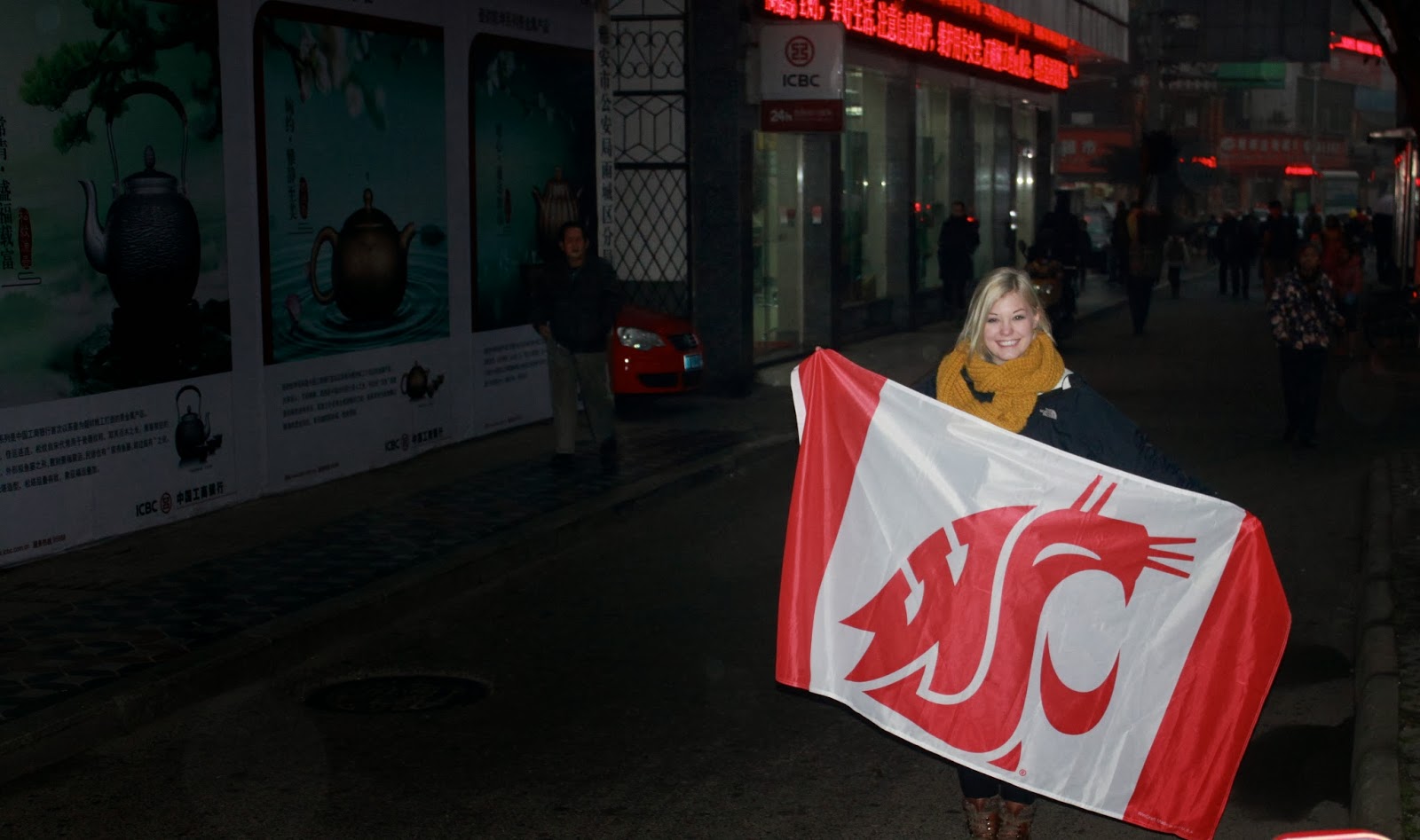
Repping the WSU Cougars in downtown Ya'an. Go Cougs! 


A man warming himself by a fire on the streets of Ya'an.
No central heating this time of year means everyone is cold.

The traffic coming over a bridge in Ya'an. 

A man selling cooked potatoes out of his cart. 

Motocycles lined up in Ya'an. Mopeds and motorcycles are the chosen mode of transportation.

The archway over a bridge in Ya'an.